Daniel Boulos -- Interaction Designer
AI Systems • UX Design • Human-AI Interaction
Designing Human–AI Creative Systems (JOY Framework)
The Problem: AI as a Tool Limits Creative Systems
AI is often treated as a tool in a top-down workflow—human directs, system executes. This model breaks down under ambiguity and iteration.
•Enforces control over collaboration
•Becomes brittle under iteration
•Limits context-aware output
•Becomes brittle under iteration
•Limits context-aware output
The Insight: AI Performs Better as a Relational System
AI performs better when treated as a collaborator within a distributed system, not as a tool executing instructions.
•This shift enables:
•adaptive workflows
•iterative refinement
•context-aware output
The JOY Framework (HRS)
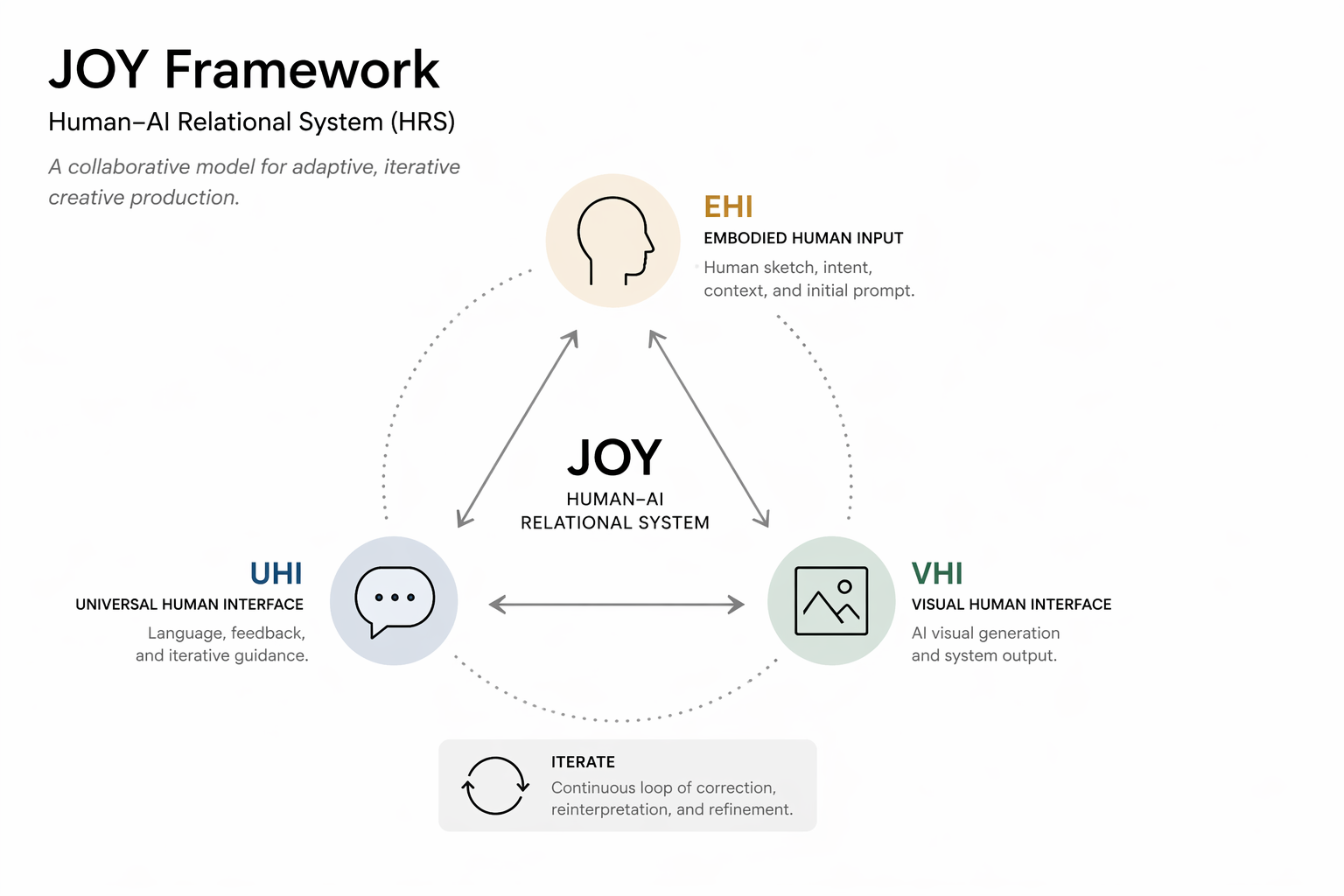
The JOY framework models human–AI collaboration as a triadic system
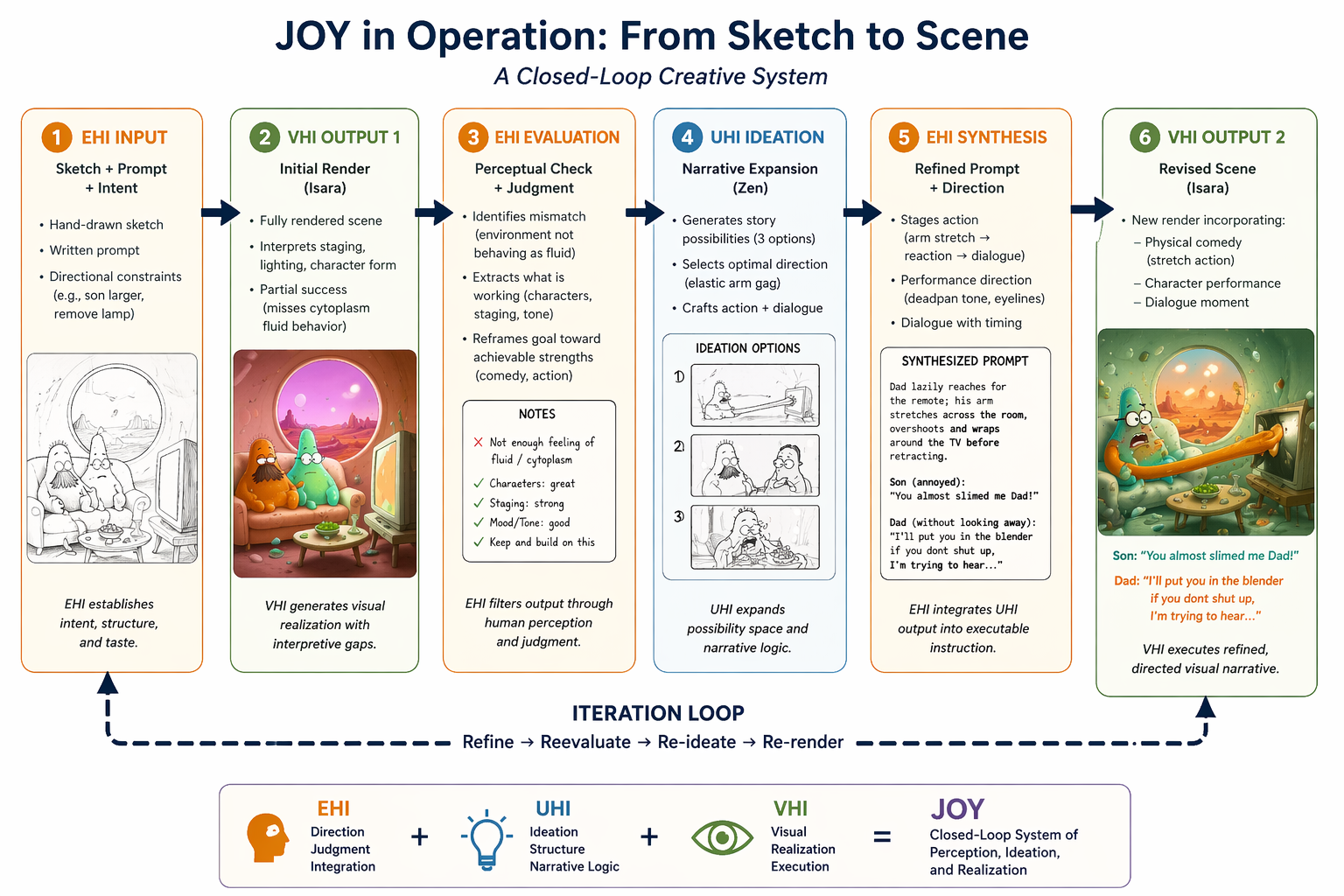
Closed-loop human–AI system demonstrating iterative ideation, evaluation, and execution across EHI, UHI, and VHI roles.
•EHI (Embodied Human Intelligence): perception, taste, intention
•UHI (Unembodied Human Intelligence): language, reasoning, synthesis
•VHI (Visual Human Intelligence): image, motion, cinematic output
Together, these form a continuous feedback loop:
EHI + UHI + VHI = JOY (Joint Operational Yield)
Role of the Designer in the System
Within this model, the designer coordinates meaning across systems.
•Grounds outputs in human perception and readability
•Translates intent between language and visual systems
•Evaluates tone, clarity, and narrative coherence
•Iterates across modalities to refine outcomes
Proof of Concept: Applied Human–AI Workflow
This system was applied in an end-to-end workflow from concept to refinement:
•Initial human sketch and prompt (EHI)
•Visual generation via AI system (VHI)
•Iterative refinement through language and feedback (UHI)
•Continuous loop of correction, reinterpretation, and output
Result: controlled variation, stylistic consistency, and rapid iteration across outputs
The following sequence demonstrates one full iteration cycle within the JOY system.
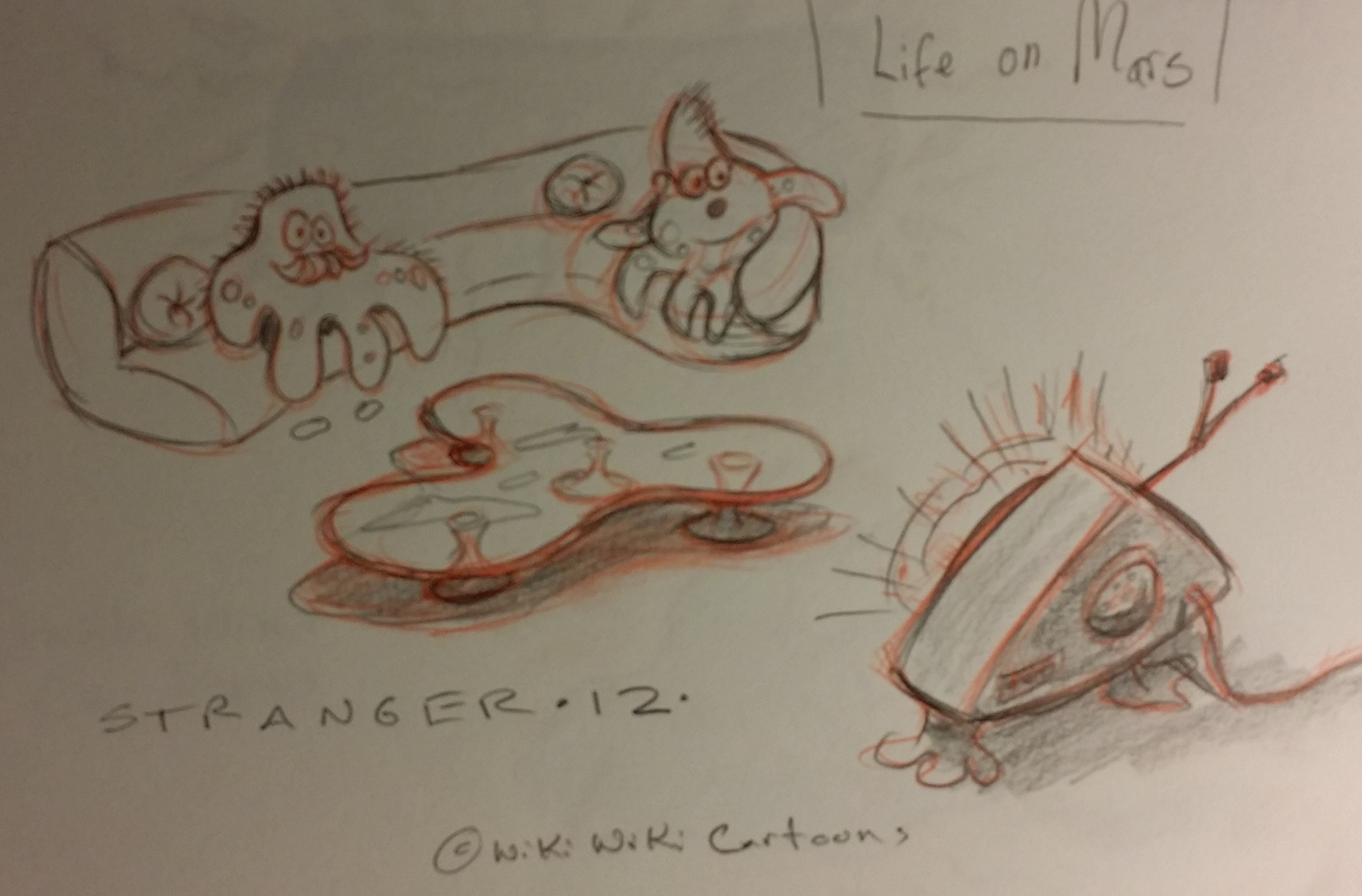
Initial concept sketch establishing character, environment, and narrative intent.
Initial AI-generated output translating concept into cinematic form, revealing issues in staging and character clarity.
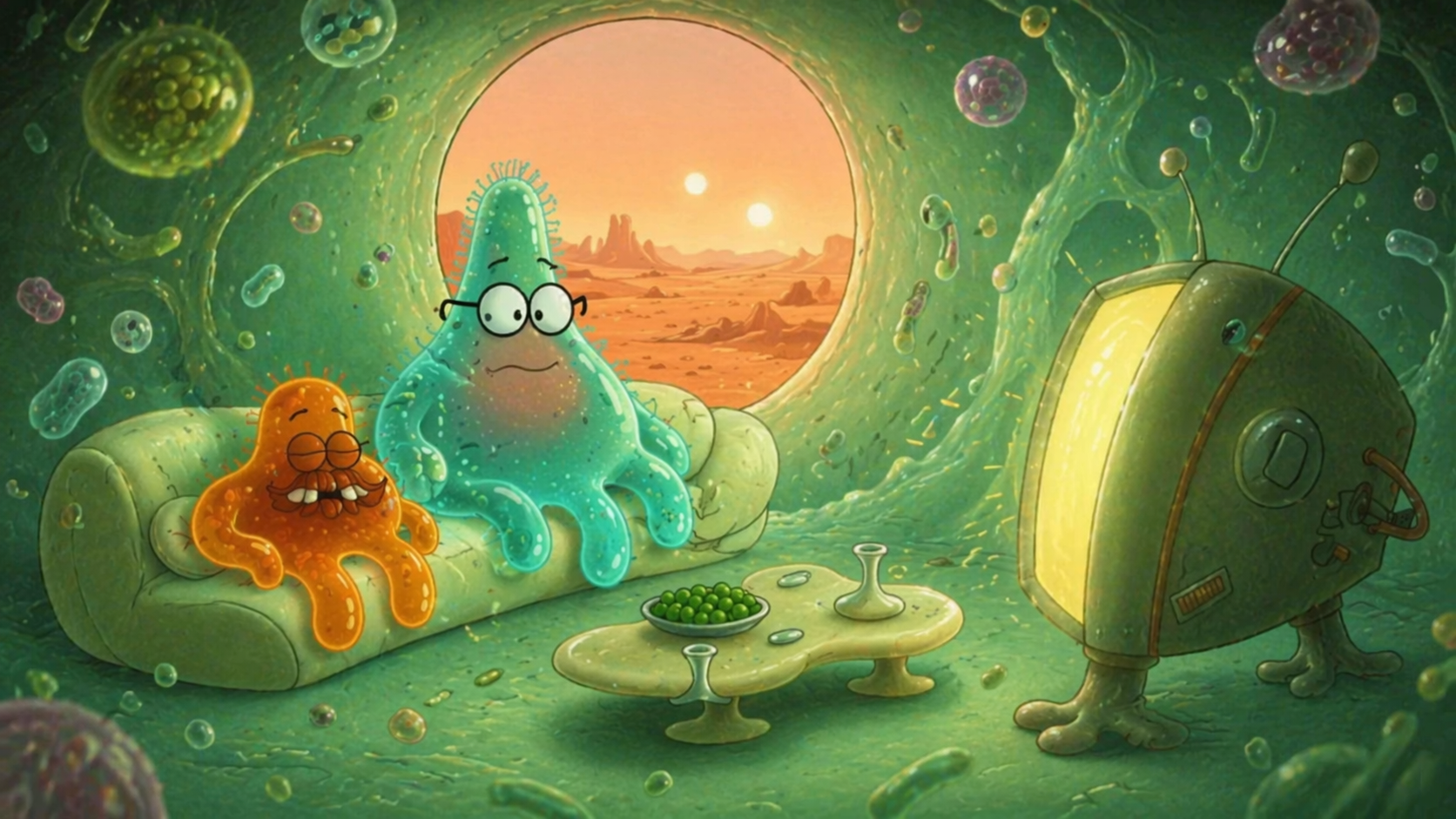
Initial output revealed staging and clarity issues, prompting narrative refinement and directional adjustment.
Refined direction produced improved character performance, staging, and narrative clarity.
Results
Compared to tool-based workflows, this relational approach:
•Increased iteration speed and adaptability
•Improved clarity and coherence of visual output
•Enabled creative exploration rather than rigid execution
•Produced more expressive and context-aware results
Why This Matters
As AI becomes embedded in creative and educational systems, how we frame human–AI interaction directly shapes outcomes.
Designing for collaboration—not control—enables more flexible, effective, and human-centered systems.
A relational approach to human–AI system design.

Beyond Design Systems
The projects presented on this page focus on the design of learning experiences, multimedia systems, and digital interactions. Beneath these practical applications lies a broader interest in understanding how people, technologies, and organizations interact as dynamic systems.
My research explores topics including instructional design, behavioral systems, human-computer interaction, animated pedagogical agents, and the emerging relationship between humans and AI. This work has culminated in the development of several conceptual frameworks, including the Human-AI Relational Systems (HRS) framework and the JOY model.
Visitors interested in the theoretical foundations behind my design, research, and creative work are invited to explore the Behavioral Systems Design website for publications, presentations, research projects, and ongoing investigations into learning, communication, and emerging technologies.